
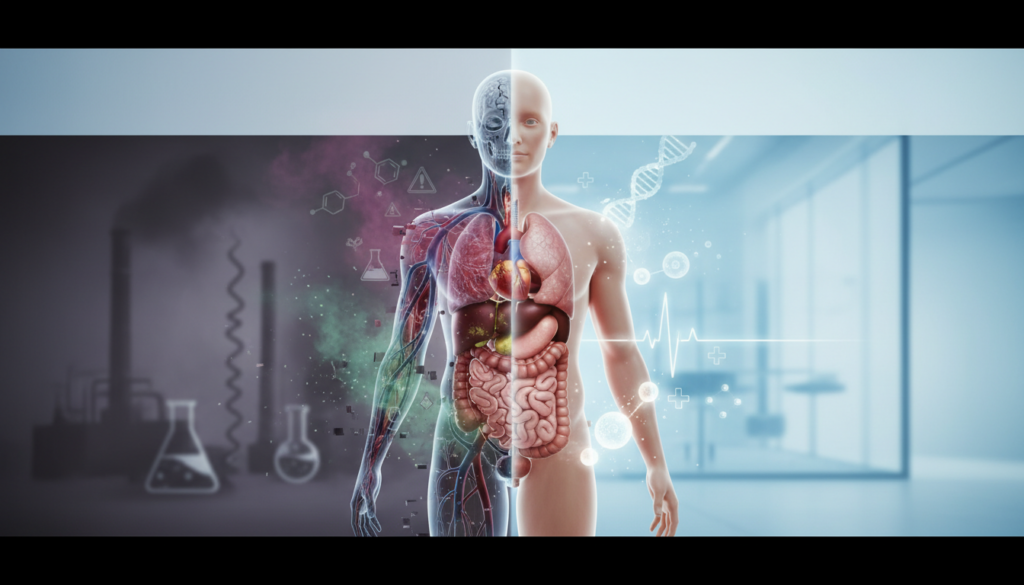
Toxicity in the human body refers to the harmful effects that occur when a substance—natural or synthetic—interferes with normal physiological functions beyond the body’s capacity to adapt. Almost any substance can be toxic at a sufficiently high dose, including water and oxygen, while substances traditionally considered “poisons” can sometimes be used therapeutically at carefully controlled doses (e.g., digitalis, chemotherapeutic agents). Toxicity is therefore not just a property of the substance, but a result of the interaction between dose, duration, route of exposure, and individual susceptibility. Toxicologists often summarize this with the principle: “The dose makes the poison.”
Once a toxic substance enters the body, its impact is governed by toxicokinetics—absorption, distribution, metabolism, and excretion (ADME). Absorption depends on the route of exposure (inhalation, ingestion, dermal, injection) and the physicochemical properties of the compound (lipid solubility, ionization, molecular size). For instance, inhaled gases like carbon monoxide are rapidly absorbed through the lungs, while lipophilic solvents pass readily through skin and cell membranes. Distribution determines where the toxicant goes—whether it remains in the bloodstream, partitions into fat, concentrates in organs like the liver, kidney, or brain, or crosses the placenta into the fetus.
Metabolism can either detoxify or bioactivate a compound. The liver is the primary metabolic organ, where enzymes (especially cytochrome P450 systems) transform lipophilic substances into more water-soluble forms for excretion. However, in some cases, metabolism creates more toxic metabolites. A classic example is paracetamol (acetaminophen), which at high doses generates NAPQI, a reactive metabolite that damages liver cells. Excretion occurs mainly via the kidneys (urine) and liver (bile/feces), but also through exhalation (for volatile compounds) and, to a lesser degree, sweat and breast milk. Impaired excretory function—such as renal failure—can significantly increase toxicity by allowing accumulation of toxicants or their metabolites.
At the cellular and molecular level, toxicity generally arises from interference with fundamental processes such as energy production, membrane integrity, protein function, or genetic material. Some toxicants inhibit key enzymes (e.g., organophosphates inhibiting acetylcholinesterase), others disrupt mitochondrial respiration (e.g., cyanide inhibiting cytochrome c oxidase), and some produce reactive oxygen species that damage lipids, proteins, and DNA. Reactive chemicals may form covalent bonds with cellular macromolecules, leading to misfolded proteins or mutations. Over time, such damage can trigger cell death via necrosis or apoptosis, or can contribute to carcinogenesis if DNA repair is incomplete or faulty.
Clinically, toxicity can manifest as acute or chronic effects. Acute toxicity results from a single or short-term high-level exposure, with rapid onset of symptoms—such as respiratory depression after opioid overdose, seizures with pesticide poisoning, or acute liver failure after a large paracetamol ingestion. Chronic toxicity, by contrast, develops over weeks, months, or years of lower-level exposure. Examples include peripheral neuropathy from chronic exposure to certain organic solvents, chronic kidney disease from long-term heavy metal exposure, or cancer from prolonged exposure to carcinogens such as benzene or asbestos. Chronic effects can be more insidious and challenging to diagnose because symptoms often appear long after initial exposures.
Different organ systems show varying susceptibility, leading to specific “target organ toxicities.” The liver, as the central metabolic organ, is highly vulnerable to hepatotoxicants (e.g., paracetamol, alcohol, certain anesthetics) due to high exposure to absorbed substances and reactive intermediates. The kidneys, which filter blood and concentrate solutes, are targeted by nephrotoxicants such as aminoglycoside antibiotics, some heavy metals, and ethylene glycol metabolites. The nervous system is particularly sensitive to many toxicants (e.g., lead, mercury, organic solvents, neurotoxic pesticides) because of its high lipid content, high metabolic demand, and limited regenerative capacity. Similarly, the bone marrow, heart, lungs, and skin can each be primary sites of toxicity depending on the agent and route of exposure.
The immune and endocrine systems are also frequent targets. Immunotoxicity may present as immunosuppression (increasing infection risk), immune stimulation, or autoimmunity. For example, some drugs and chemicals can trigger hypersensitivity reactions, including severe conditions like Stevens–Johnson syndrome or anaphylaxis. Endocrine-disrupting chemicals (EDCs)—such as certain pesticides, plasticizers (e.g., phthalates, bisphenol A), and industrial pollutants—can mimic, block, or alter the synthesis and metabolism of hormones. These disruptions may affect growth, metabolism, reproduction, and neurodevelopment, often with subtle but long-lasting consequences, particularly when exposure occurs during critical developmental windows like fetal life or early childhood.
Individual susceptibility plays a major role in how toxicity manifests. Genetic polymorphisms in metabolic enzymes, transporters, and receptors can alter how quickly a person activates or detoxifies a compound, modifying both effectiveness and risk. For example, individuals with reduced activity of certain acetyltransferases or P450 enzymes may be more sensitive to standard drug doses or certain environmental carcinogens. Age, nutritional status, pre-existing diseases (e.g., liver or kidney disease, cardiovascular disease), and co-exposures (multiple drugs or chemicals at once) all influence toxic response. The fetus, infants, and the elderly are often more vulnerable due to immature or declining detoxification systems and repair mechanisms.
From a diagnostic standpoint, recognizing toxicity involves correlating exposure history, clinical presentation, and laboratory findings. Toxidromes—characteristic clusters of signs and symptoms—can suggest specific classes of toxicants, such as cholinergic, anticholinergic, opioid, sedative-hypnotic, or sympathomimetic toxidromes. Laboratory tests may include measurement of specific toxicant levels (e.g., blood lead, serum paracetamol), assessment of organ function (liver enzymes, kidney function tests, coagulation profile), and supportive investigations (blood gases, lactate, ECG). Imaging and specialized tests may be needed for chronic or subtle toxicities, such as neuropsychological testing in chronic solvent exposure or bone marrow biopsy in suspected toxic aplastic anemia.
Management of toxicity in the human body rests on four broad pillars: decontamination, supportive care, specific antidotes, and enhanced elimination. Decontamination may involve removing contaminated clothing, washing skin, gastric decontamination (limited indications), or preventing further inhalation exposure. Supportive care—maintaining airway, breathing, and circulation; controlling seizures; correcting fluid and electrolyte imbalances—is the cornerstone of management and often lifesaving even without a specific antidote. Where available, antidotes are designed to counter key mechanisms (e.g., naloxone for opioids, N-acetylcysteine for paracetamol, atropine and oximes for organophosphates, hydroxocobalamin for cyanide). Enhanced elimination methods such as hemodialysis or hemoperfusion are reserved for selected substances that are dialyzable and associated with severe toxicity (e.g., methanol, ethylene glycol, salicylates, lithium).
Beyond clinical care, understanding toxicity in the human body is fundamental to risk assessment, regulation, and prevention. Toxicological data from animal studies, in vitro systems, and human epidemiology inform exposure limits, workplace standards, and safety margins for drugs, food additives, industrial chemicals, and environmental contaminants. Modern toxicology increasingly incorporates mechanistic insights, “omics” technologies, and computational models to predict toxicity and reduce reliance on animal testing. Ultimately, the goal is not only to treat poisoning when it occurs, but to design safer chemicals, minimize harmful exposures, and protect vulnerable populations so that the delicate balance of human physiology is preserved.