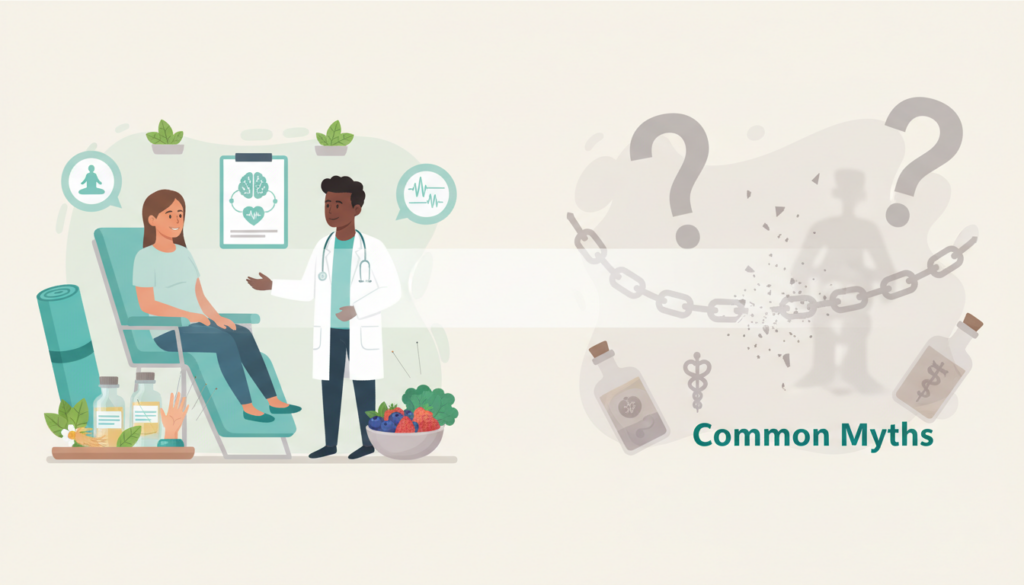
One of the most common misconceptions about holistic medical practice is that it is “anti-medicine” or opposed to modern science. In reality, many holistic practitioners actively value evidence-based medicine and often work alongside conventional treatments. The holistic approach simply broadens the lens: instead of focusing only on a symptom or a lab result, it considers how physical, emotional, mental, social, and sometimes spiritual factors interact. A holistic practitioner might suggest medication for blood pressure while also addressing stress, sleep, nutrition, and movement—not because medication is rejected, but because it is seen as one piece of a larger puzzle.
Another prevalent myth is that holistic care is just a collection of unproven “alternative” therapies. While it is true that some modalities have less research than others, many commonly used holistic interventions—such as mindfulness, yoga, acupuncture, nutritional therapy, and cognitive-behavioral techniques—are supported by a growing body of scientific evidence. Moreover, holistic practice is a philosophy of care, not a specific modality. It is about how care is delivered: person-centered, integrative, and tailored to the individual. The idea that holistic equals “unscientific” often stems from unfamiliarity with the research or from conflating responsible holistic practice with fringe, non-evidence-based claims.
A third misconception is that holistic practitioners promise cures for all conditions if you just “think positively” or “eat clean.” Responsible holistic practitioners do not claim to cure everything; they aim to optimize health within the reality of a person’s condition. Chronic illnesses, genetic conditions, and complex health patterns may not be reversible, but quality of life can often be improved. Holistic care emphasizes realistic expectations: supporting the body’s capacity to heal where possible, managing symptoms, and helping people live more fully even when a cure is not possible. Overpromising outcomes is a red flag, not a feature of genuine holistic practice.
There is also a myth that holistic medicine blames the patient for being sick, implying that illness is purely a result of negative thoughts, “low vibration,” or personal failure. A grounded holistic approach recognizes that illness arises from a multitude of factors, including genetics, environment, trauma, social determinants of health, and simple chance. While mindset and behavior can influence health, they are only part of the picture. Ethical holistic practitioners support clients in making empowering changes without shame or judgment. The aim is to foster self-compassion and agency, not guilt or spiritual bypassing.
Another misunderstanding is that holistic care is vague, impractical, and focused only on “energy” or spiritual concepts. While some practitioners do incorporate subtle-energy work or spiritual frameworks, holistic medicine can be highly practical and specific. It might include detailed lifestyle plans, targeted nutritional strategies, structured stress-management techniques, tracking of biomarkers, and clear treatment goals. The difference from many conventional encounters is the time spent understanding the person’s story and context before deciding on interventions. Holistic practice is not the absence of structure; it is a more comprehensive structure.
Some people believe that holistic practitioners are uniformly against vaccines, surgery, or emergency interventions. In fact, many holistic practitioners fully support timely use of acute medical care and public health measures. The holistic lens recognizes that there is a crucial difference between crisis care and long-term care: you may use surgery or pharmaceuticals to stabilize an acute issue, then use lifestyle, mind–body practices, and other supports to enhance recovery and prevent recurrence. The myth that one must choose only holistic or only conventional care can deprive people of the benefits of both.
There is also a stereotype that holistic medicine is only for people with ample time and money, making it a luxury rather than a legitimate health option. While some services can be expensive and not always covered by insurance, the core principles of holistic care—such as mindful listening, personalized education, and focusing on root causes—are not inherently tied to high cost. Many holistic practices emphasize small, accessible changes: simple breathing techniques, basic dietary shifts within a person’s means, improving sleep hygiene, or building supportive relationships. The challenge is often systemic (coverage, reimbursement, and access), not an intrinsic elitism in the holistic philosophy itself.
Another myth is that holistic practitioners rely solely on personal intuition and ignore diagnostics or measurable outcomes. In reality, many holistic clinicians use labs, imaging, standardized assessments, and outcome measures, but they interpret those findings within a broader context. They might pay attention not only to whether a value is “within range,” but whether it is optimal for that individual, and they track subjective changes like energy, mood, resilience, and function alongside objective data. Intuition may play a role in guiding questions, but it does not replace careful assessment and continuous evaluation of what is or isn’t working.
There is also confusion between holistic practice and simple “wellness trends” or fads. Holistic medicine is not defined by the latest supplement, detox, or diet making headlines. Instead, it is grounded in timeless principles: balance, interconnectedness, prevention, and partnership between practitioner and client. A holistic practitioner should be willing to question trends, adapt recommendations to a person’s unique situation, and discontinue approaches that are ineffective or burdensome. When people equate holistic care with whatever is currently popular on social media, they miss the deeper, more stable values that guide authentic holistic work.
Finally, a powerful myth is that holistic practitioners are “soft,” focusing only on comfort and positivity instead of deep, sometimes uncomfortable change. In truth, holistic work can be challenging, because it often asks people to look honestly at their habits, relationships, boundaries, beliefs, and life patterns. It may involve grief for old identities, the courage to make lifestyle or career shifts, or confronting unresolved emotional pain. Compassion is central, but so is accountability and a commitment to growth. Dispelling these myths helps people see holistic medical practice as what it aspires to be: a respectful, integrative, and individualized path that can stand alongside conventional medicine to support whole-person health.